Clear
We explain materials, prices, firing stages and limitations before they become surprises.
About the project
Learn Pottery Studio is a 2026 independent pottery education concept designed for adults who want a thoughtful introduction or a steadier practice.
Why this studio
Many people arrive believing they are not artistic, not patient or simply bad with their hands. We replace that verdict with a process.
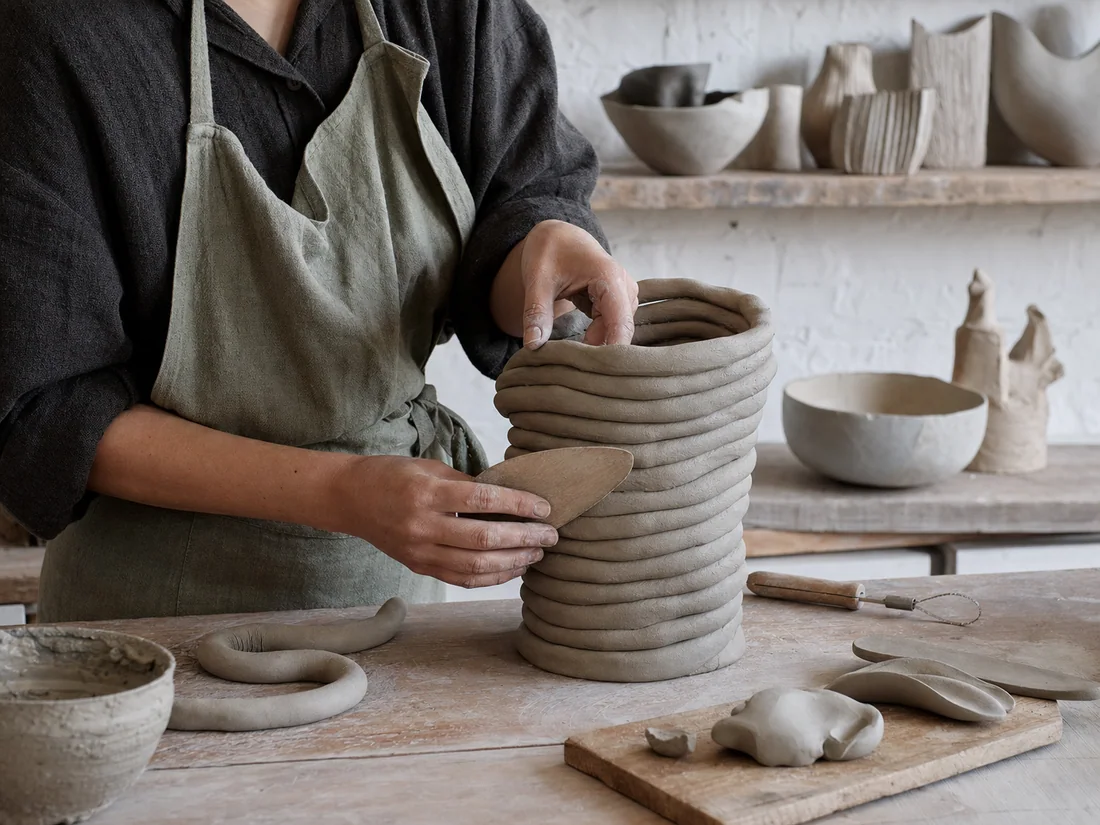
Each class breaks a technique into observable choices: where the pressure comes from, how wet the surface is, what the wall thickness feels like and when to stop. Learners see the tutor demonstrate, make their own version and receive feedback grounded in the object in front of them.
The programme is intentionally compact. Public sessions stay small, open studio is structured, and kiln services are explained in plain English. The visual identity is earthy but not rustic nostalgia: contemporary ceramics belongs to everyday city life.
Four studio values
We explain materials, prices, firing stages and limitations before they become surprises.
Hands learn through repetition. Tutors make room for it instead of rushing towards a photo.
Clay is reclaimed where practical, tools are shared well and test pieces carry useful knowledge.
Questions, access needs and different learning speeds are treated as normal studio information.
A 2026 launch path
Confirm tutors, course plans and kiln schedules.
Verify the proposed venue agreement and room access.
Publish the final legal operator, insurance and data details.
Connect live availability, payments and secure form delivery.
Facilities planned
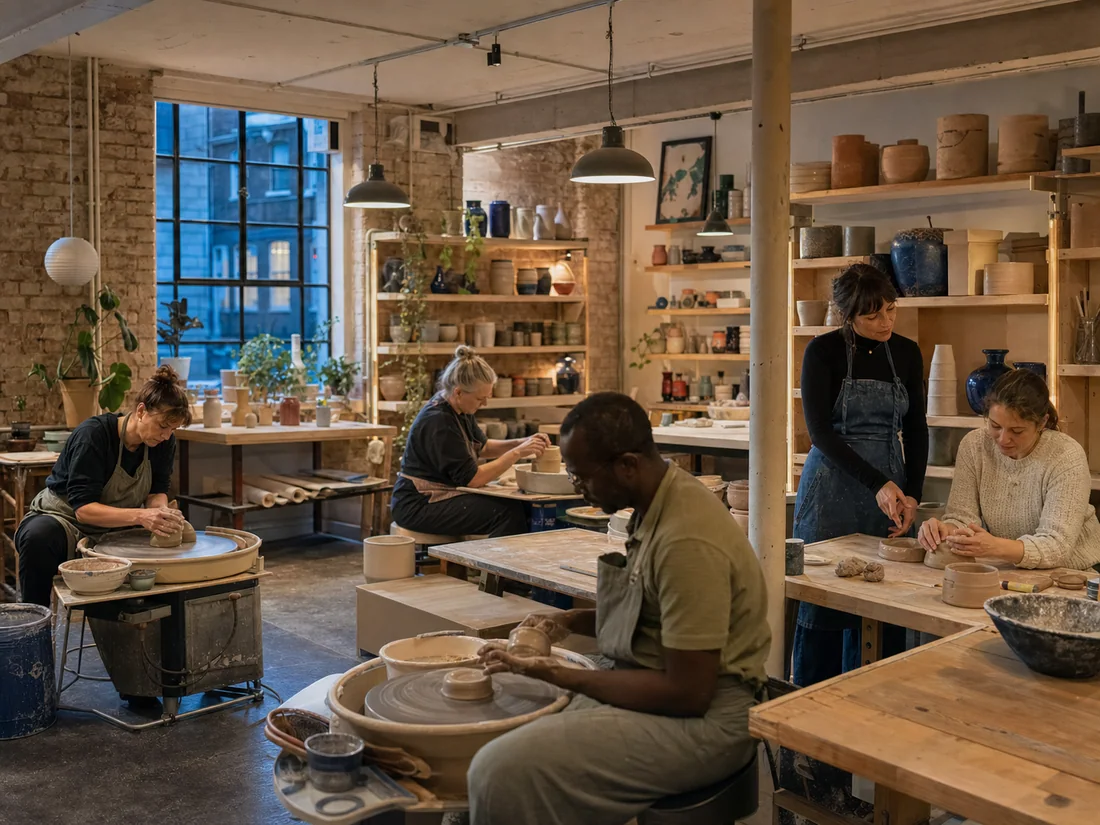
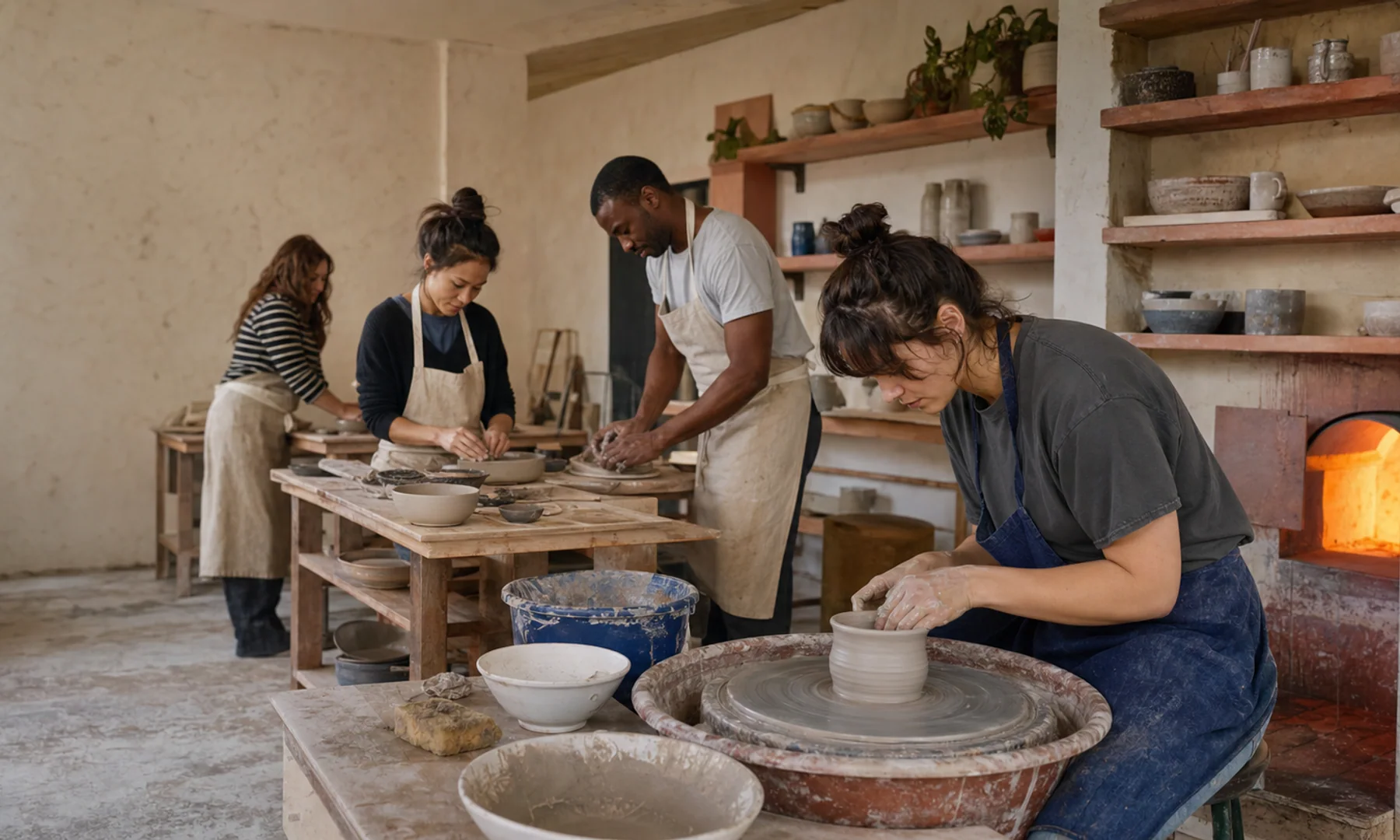
The intended layout includes teaching wheels, a communal hand-building table, glaze test area, drying racks, tool wash-up and a separated kiln zone.